
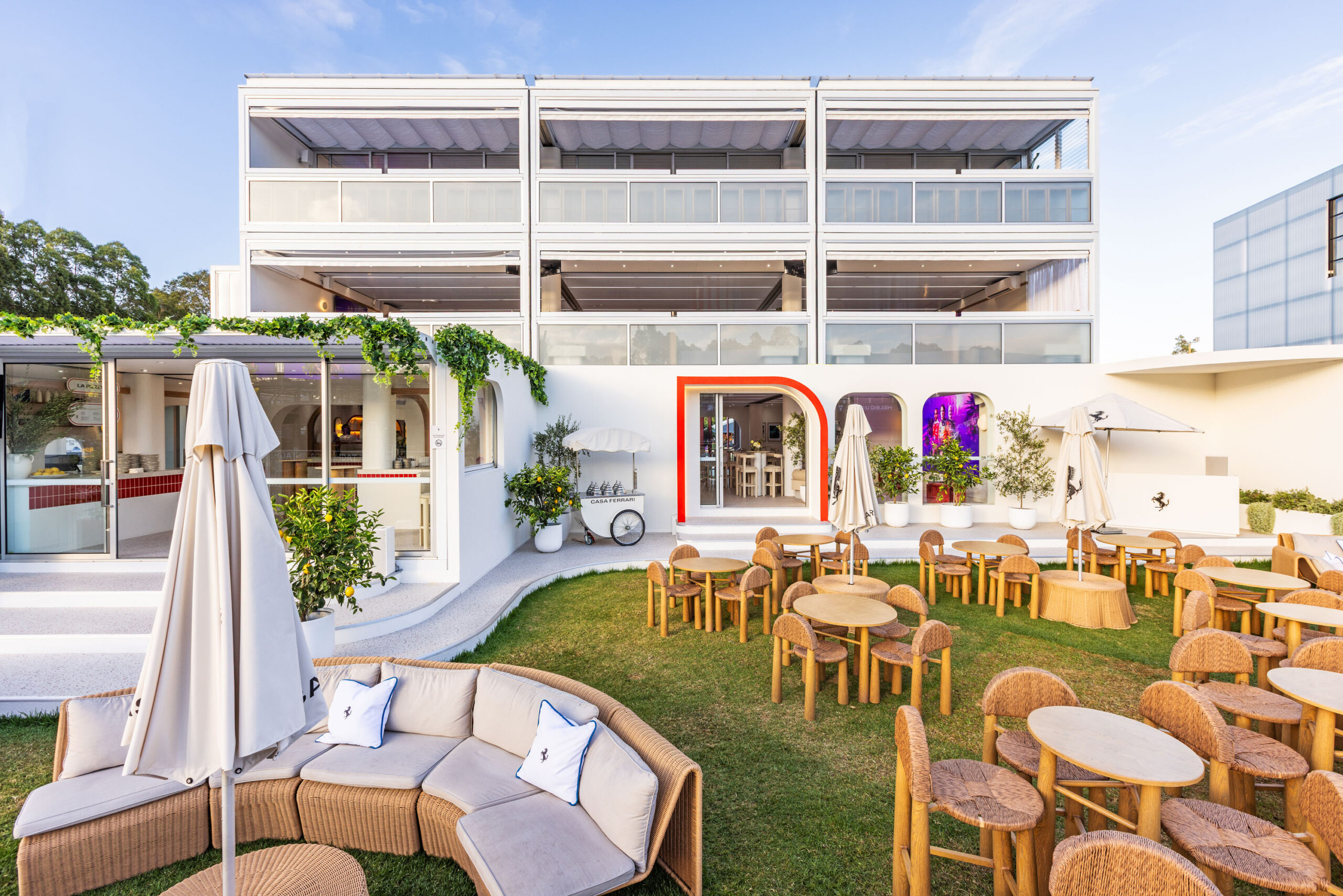
What if a building didn’t have to have a single destination – or a single life?
Traditional construction is often designed around a specific site, purpose and lifespan. Once that purpose comes to an end, the building may be demolished, with materials becoming waste and a new structure required for the next project.
The Spacecube Build System® takes a different approach.
Our modular building system is designed as a relocatable asset rather than a single-use structure. Components can be dismantled, reconfigured, relocated and reused across different projects, industries and locations.
That means the value of the structure doesn’t necessarily end when its first project does.
This approach is at the heart of what makes Spacecube’s approach to sustainable modular building different – designing for reuse and longevity to support a more circular approach to construction
What Makes Modular Construction More Sustainable?
Sustainability in construction isn’t simply about how a building is built. It’s also about what happens when its original purpose has been fulfilled.
A conventional building can be difficult to adapt or relocate. Its materials become tied to a particular site and purpose, and demolition can generate significant construction and demolition waste.
A modular system designed for disassembly offers another option.
Spacecube’s components are manufactured to work together as a system, allowing structures to be dismantled, reconfigured and redeployed rather than treated as single-use buildings.
Designing for Reuse
The sustainability principle behind Spacecube is simple: design a system for reusability and longevity.
A Spacecube structure can be designed for one application and later adapted for another. Event infrastructure can move from one venue to another rather than being manufactured from scratch for every event, while a facility built for one purpose can potentially be reconfigured to meet changing requirements.
This is the difference between designing a temporary building and designing a semi-permanent, relocatable asset.
Reducing Waste and Extending Material Lifecycles
By retaining and reusing modular components, Spacecube can reduce the need for new materials and minimise the amount of infrastructure that needs to be demolished and discarded.
Instead of viewing a building as a finished product with a fixed lifespan, the system allows its components to continue working as part of new configurations and structures.
Real-World Examples of Reuse
The sustainability of a modular system is best demonstrated by what happens after its first project.
Australian Open to Formula 1
Spacecube’s modular system has also demonstrated its circular potential within the events industry.
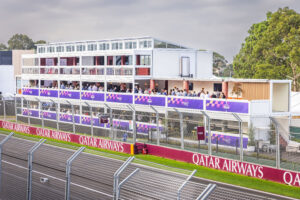
For four consecutive years, a 3,000sqm, reusable three-storey broadcast and media facility has been built for the Australian Open. Following each tournament, the structure was dismantled and its components redeployed to create multiple large-scale structures for the Formula 1 Australian Grand Prix.
The same system has been able to support two major international sporting events in different locations, rather than requiring two entirely new construction projects.
Read more about the Australian Open and F1 projects →
Mirvac Property Display Suites
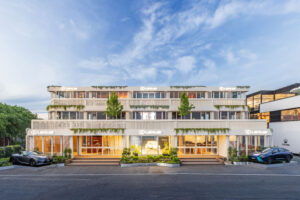
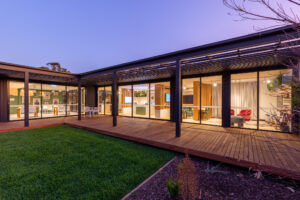
SPACECUBE built Mirvac’s ‘Smiths Lane’ property display suite in Clyde in 2019. This stunning semi-permanent sales suite was onsite for 3+ years. Once this property development was complete, Spacecube’s Build System® was, relocated, reconfigured and reused for Mirvac’s ‘The Fabric’ display suite which is currently on site in Altona.
Read more about the Mirvac projects →
Monash Health COVID-19 RESUS Facility
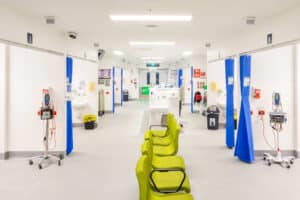
During the COVID-19 pandemic, Spacecube was used to rapidly deliver additional healthcare capacity for Monash Health.
When the facility was no longer required for its original purpose, Spacecube’s system was repurposed for the development of a community health centre, making it a reusable asset for Monash’s Health.
It’s a practical example of designing infrastructure with its next use in mind.
Read more about the Monash Health project →
Reuse Across Major Events
The same principle applies to Spacecube’s event and brand activation work around the world.
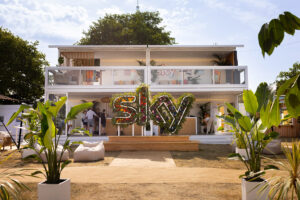
Spacecube structures have supported projects associated with events including:
- Goodwood Festival of Speed, UK
- Coachella, USA
- Formula 1 – USA, UK, Spain and Australia
- Paris Olympics, France
- Australian Open
- Melbourne Cup Carnival, Australia
Rather than treating event infrastructure as disposable, a reusable modular system creates the opportunity to move the same assets from one event to the next.
A More Circular Approach to Construction
The true sustainability of modular construction isn’t simply about moving a building from one site to another. It’s about changing how we think about the lifecycle of a building.
Instead of:
Design → Build → Use → Demolish
a reusable modular system can follow a different lifecycle:
Design → Manufacture → Install → Use → Reconfigure → Relocate → Reuse
This is particularly valuable in industries where requirements change quickly. A sporting event may need hospitality and media facilities today, while a healthcare provider may require additional clinical space tomorrow.
The requirement changes, but the underlying building system doesn’t necessarily have to start again from zero.
Sustainable Modular Building for a Changing World
The construction industry is under increasing pressure to reduce waste, use resources more efficiently and consider the environmental impact of buildings across their entire lifecycle.
Modular construction can play a role in this transition – particularly when buildings are designed for disassembly, relocation and reuse.
For Spacecube, sustainability isn’t an additional feature added to the building. It is embedded in the way the system is designed.
Build for Today. Design for What’s Next.
Sustainable building doesn’t necessarily mean building less. It can also mean building smarter and making what we build work harder for longer.
The Spacecube Build System® is designed to provide the flexibility to adapt as requirements change – whether that means expanding a facility, relocating a structure or giving existing components an entirely new purpose.
Because when a building can be reused, its lifecycle doesn’t have to end when its first project does.
Want to explore a more flexible and sustainable approach to your next project? Talk to the Spacecube team about how our modular building system can be designed, deployed and reused to meet your changing requirements.
FAQs
How is modular construction more sustainable than traditional construction?
Modular building can support a more sustainable approach when buildings are designed for disassembly, relocation and reuse. Rather than treating a structure as a single-use asset, Spacecube’s reusable modular system allows components to be redeployed across multiple projects, reducing the need for new materials and avoiding unnecessary demolition and waste.
Can modular buildings have a lower environmental impact?
Designing buildings for disassembly and reuse can significantly reduce the amount of material that needs to be discarded when a project ends. Instead of demolishing an entire structure, modular components can be reused in another configuration or location.
Spacecube’s approach is based on retaining the value of its modular components and putting them back into use wherever possible.
Can modular construction help reduce the amount of construction waste?
Yes. Traditional construction generates substantial demolition waste, whereas modular systems retain up to 90% of their materials for reuse.
By designing buildings as relocatable assets rather than permanent fixtures, modular construction diverts tonnes of steel, aluminium, and composite materials away from landfills, aligning with the net-zero mandates now necessitated by major event organisers and healthcare providers globally.