
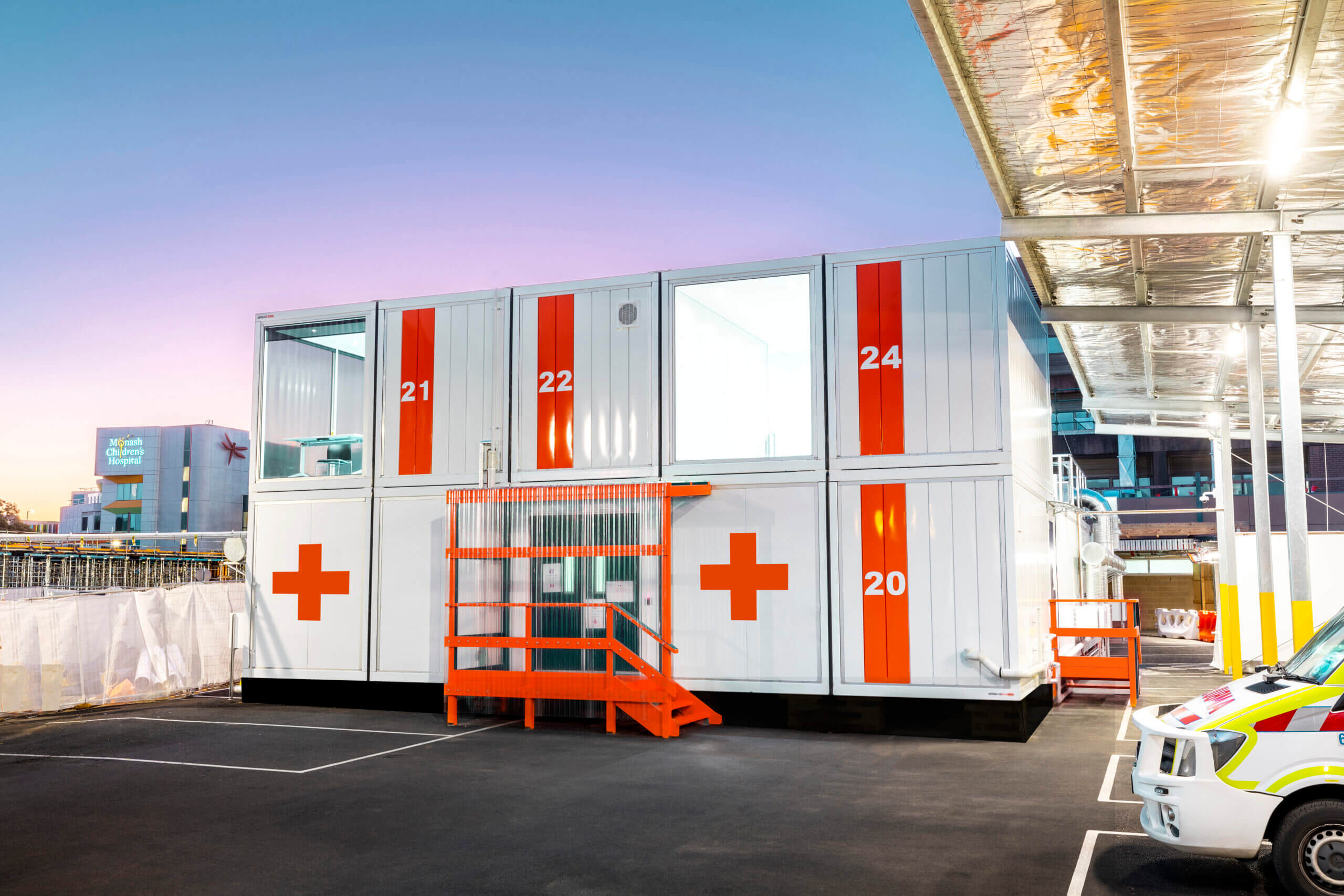
Have you ever wondered what happens to buildings when they’re no longer in use? More often than not, the answer is demolition and a new construction project taking their place. But what if we told you that it doesn’t always have to be that way?
SPACECUBE takes a sustainable approach with modular buildings that are designed to be reconfigured, relocated, and reused as needs change. What was once a healthcare facility can be repurposed into an event space, giving individual building components more than one purpose.
In this article, we explore what makes SPACECUBE’s modular approach more sustainable and how designing for reuse can help create a more circular future for construction.
What Makes Modular Construction More Sustainable?
Traditional construction follows a take-make-dispose model. Materials are extracted, assembled on-site, and ultimately demolished into landfill waste when the building reaches end-of-life.
Modular construction flips this script by designing buildings for disassembly and reuse from the outset. At SPACECUBE, our modular construction approach exemplifies this approach. Our modules are designed as permanent, relocatable assets as opposed to temporary fixes.
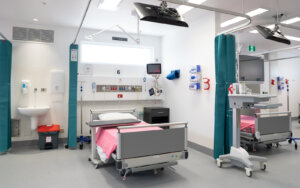
For instance, when the Monash Health COVID-19 RESUS facility completed its pandemic response, 90% of the modular structure was recycled into a community health centre instead of being demolished.
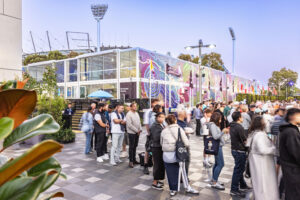
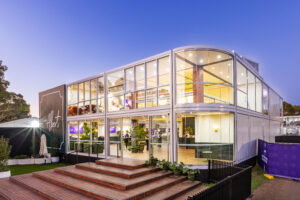
The same principle also applies to event infrastructure. For instance, modules deployed at the Australian Open were reconfigured just weeks later into 11 structures at the F1 Australian Grand Prix, to then be relocated again to other venues.
This circular model delivered three key sustainability advantages:
Waste Reduction
Modular construction produces up to 90% less waste compared to traditional builds. This is because modules are reused across multiple projects rather than simply discarded.
Lower Carbon Emissions
Manufacturing modules off-site in controlled factory conditions reduces energy use and transport emissions versus on-site construction.
Extended Lifecycle
Modules can be reconfigured, relocated, and repurposed indefinitely. This transforms single-use infrastructure into long-term assets.
What Happens After the Building Is No Longer Needed?
The good news is that they do not end in demolition and landfills. Modular buildings are designed for a second life. When a SPACECUBE facility completes its initial purpose, the modules are disassembled and redeployed to new sites or reconfigured for different uses.
Examples that demonstrate this circular lifecycle include:
Monash Health COVID-19 RESUS facility
After serving as Australia’s first pandemic emergency ward, 90% of the modular structure was recycled into a community health centre.
Read more about this project here.
Australian Open Broadcast Centre
The 3,000sqm triple-storey media facility was dismantled after the tournament and rebuilt just a month later at the Formula 1 Australian Grand Prix.
Read more about this project here.
Events Nationally & Globally
Modules used for premium hospitality pavilions are relocated to other major events and brand activations across Australia and internationally.
- Sky Sports – Goodwood Festival of Speed
- Formula 1
- Paris Olympics
- Royal Ascot
- SXSW
- Premier League
- US college football
The Future of Sustainable Modular Construction
Once construction is complete, a building’s environmental impact doesn’t just end. What happens when it is no longer is just as, if not more, important. Modular construction offers a different way of thinking about this by designing buildings that can have more than one life.
SPACECUBE’s reusable modules can help reduce waste by up to 60% compared to traditional construction. Because components can be dismantled, moved, and reconfigured, the same materials can be used across different projects instead of being discarded or demolished after a single use.
This is particularly significant for industries where requirements shift quickly. A sporting event might need temporary hospitality facilities today, while a healthcare facility may require extra clinical space tomorrow. Modular systems are designed to adapt to those changing demands.
Build More Sustainably with SPACECUBE
Looking for a new sustainable way to build? Opt for a modular system. Modular systems are designed to adapt and be reused as your needs change, wherever and whenever you need them. Get in touch today with our team today to discuss your next project.
FAQs
How is modular construction more sustainable than traditional construction?
It’s more sustainable because it follows a circular design model. Each module is inherently designed for disassembly and reuse, rather than demolition. Our modular systems cut material waste by up to 90%, with modules being repurposed and deployed across multiple events.
Can modular buildings have a lower environmental impact?
Yes, modular buildings have a significantly lower environmental impact through reduced carbon and material waste. The same modules are inspected and redeployed across multiple projects, reducing the need for new materials and helping lower overall resource consumption.
Can modular construction help reduce the amount of construction waste sent to landfill?
Yes. Traditional construction generates substantial demolition waste, whereas modular systems retain up to 90% of their materials for reuse.
By designing buildings as relocatable assets rather than permanent fixtures, modular construction diverts tonnes of steel, aluminium, and composite materials away from landfills, aligning with the net-zero mandates now necessitated by major event organisers and healthcare providers globally.